1. Uncovering the Pain Point: Robotaxi's Grand Vision and Real-World Challenges
Opening Story: From "Million Robotaxis" to "Securities Fraud Allegations"
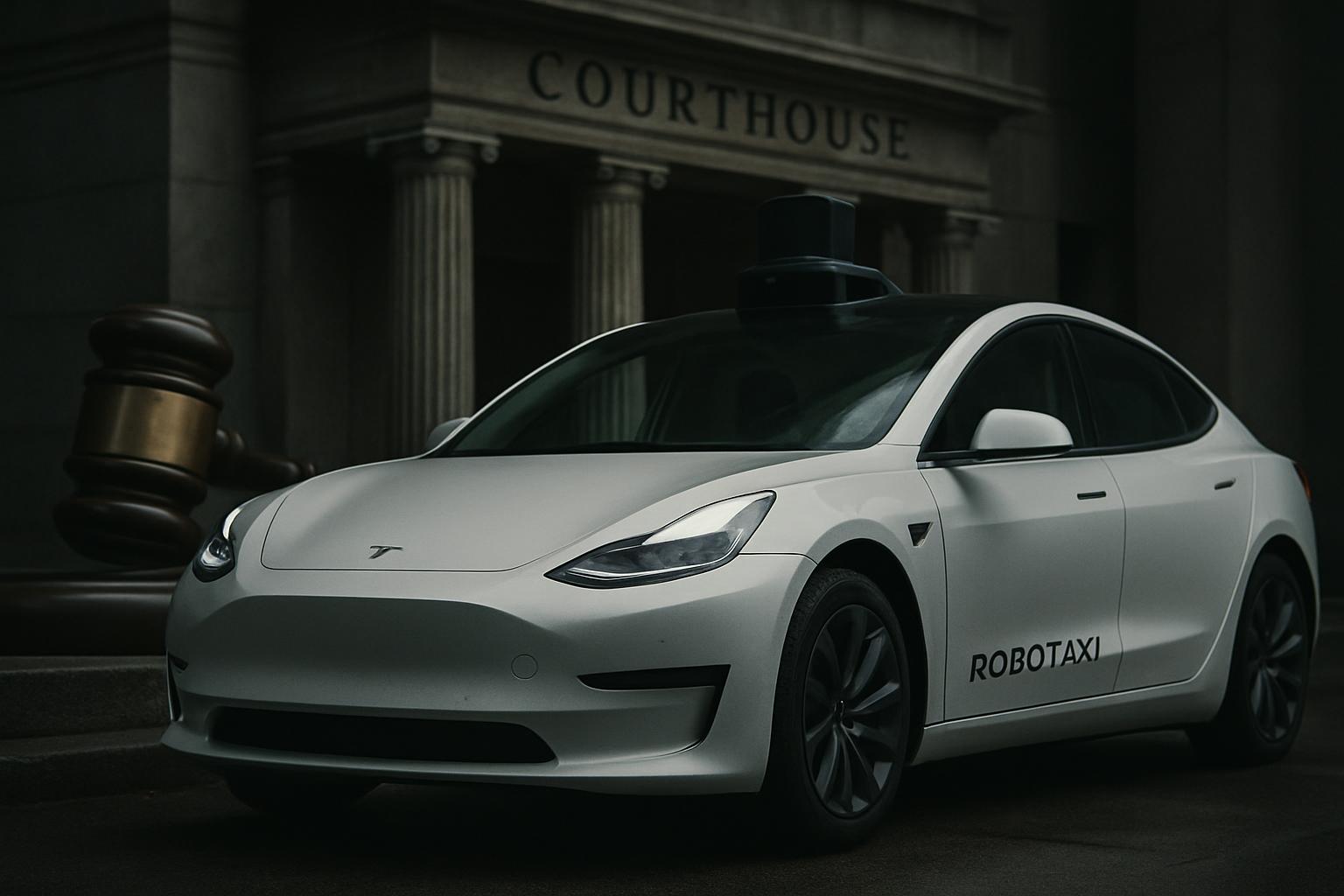
Elon Musk has repeatedly painted a grand vision for Tesla's Robotaxi: a network of fully autonomous vehicles that will revolutionize urban transportation and generate substantial income for owners. This vision is undoubtedly exciting and has attracted countless investors. However, a recent piece of news has cast a shadow over this promising future – Tesla and Musk are facing a class-action lawsuit from activist shareholders, accusing them of "securities fraud" in the promotion of Robotaxi, by concealing "significant risks" associated with autonomous driving technology.
Data Support: FSD's Controversy and Safety Concerns
This is not the first time Tesla's autonomous driving technology has faced controversy. For a long time, Tesla's "Full Self-Driving" (FSD) system has garnered significant attention, but it has also been accompanied by safety incidents and regulatory scrutiny. For example, a recent Florida jury ruled Tesla 33% responsible for a fatal accident involving Autopilot [7]. Shareholders allege that Tesla and Musk may have overstated Robotaxi's readiness and underestimated its safety risks, causing investors to suffer losses between April 19, 2023, and June 22, 2025 [4, 5]. This lawsuit undoubtedly reveals the immense challenges and potential risks faced by autonomous driving technology in its journey from research and development to large-scale commercialization.
2. Scientific Principles: The Bright and Dark Sides of Autonomous Driving Technology
Expert Advice: The Long Road to L5 Autonomous Driving
Robotaxi's realization depends on the maturity of L5 (fully autonomous driving) technology. This means that vehicles can independently complete all driving tasks at any time, any place, and in any weather conditions, without human intervention. However, several experts in the field of autonomous driving point out that the realization of L5 autonomous driving is far more complex than imagined, facing enormous technical and ethical challenges.
•Complexity of Perception and Decision-Making: Autonomous driving systems need to perceive the surrounding environment 360 degrees through sensors such as cameras, radar, and lidar, and process massive amounts of data in real-time to identify obstacles, pedestrians, traffic signs, etc. More challenging is that the system needs to make complex decisions in a rapidly changing traffic environment, just like humans, such as predicting the behavior of other vehicles and pedestrians, and responding to emergencies. Any minor perception or decision error can lead to serious consequences.
•Extreme Weather and "Long-Tail Effects": Autonomous driving systems perform well under ideal weather conditions, but in extreme weather such as rain, snow, or heavy fog, sensor performance can be severely affected, leading to reduced perception capabilities. In addition, autonomous driving also faces the "long-tail effect" problem, which refers to rare scenarios that occur infrequently but can lead to accidents if they do. These scenarios are difficult to cover through extensive data training and require a higher level of generalization and robustness.
•Ethical and Legal Dilemmas: How autonomous driving vehicles make "trolley problem"-like ethical choices when facing unavoidable accidents, such as weighing between protecting passengers and protecting pedestrians, is an unresolved issue. Furthermore, once an accident occurs, the issue of liability is also very complex, involving multiple parties such as manufacturers, software providers, and vehicle owners.
User Story: Autonomous Driving Experience from "Trust" to "Concern"
"I used to trust Tesla's Autopilot very much, thinking it would save me a lot of trouble. But once on the highway, it suddenly misidentified something and almost hit the guardrail, which scared me to death. Since then, I haven't dared to let go completely." shared a Tesla owner. This shift from initial "trust" to later "concern" reflects users' changing perceptions of the real capabilities of autonomous driving technology. Although Tesla's FSD system is continuously improving, its name "Full Self-Driving" may, to some extent, give users excessively high expectations, thereby overlooking its essential need for human supervision.
3. Product Features: The Core of the Robotaxi and FSD Controversy
Tesla's Robotaxi vision is built upon its FSD (Full Self-Driving) system. However, it is this core "product feature," on which Musk has placed high hopes, that has become the focal point of the current lawsuit.
FSD's Functions and Limitations:
•Feature Promotion vs. Actual Capability: Tesla has consistently promoted FSD as a system capable of "full self-driving," including features like Autosteer on navigation, auto lane change, auto park, summon, and traffic light and stop sign control. However, despite the name "Full Self-Driving," Tesla also acknowledges that the system still requires drivers to remain vigilant and ready to take over at any time. This gap between promotion and actual capability is one of the key points of contention.
•Beta Testing and Risks: The FSD system is currently still in its Beta testing phase, which means it may have unknown errors and risks. Tesla distributes FSD Beta versions to some owners through an "early access program," allowing them to test it on public roads. While this helps collect a large amount of data to improve the system, it also raises concerns about the safety of public road testing.
•Data Transparency and Safety: The lawsuit alleges that Tesla concealed "significant risks" related to FSD and Robotaxi. This includes the system's performance in complex traffic environments, accident rates, and the level of driver attention required. A lack of transparent data disclosure makes it difficult for investors and the public to fully assess its safety.
Robotaxi's Business Model and Legal Challenges:
•Shared Mobility Vision: Musk has envisioned that owners could add their Teslas to a Robotaxi network, earning income through autonomous driving functions when their vehicles are idle. This shared mobility model has enormous commercial potential but also faces complex regulatory and legal challenges, including operating licenses, insurance liability, and the legal status of autonomous vehicles.
•Liability Attribution: When an autonomous vehicle is involved in an accident, defining liability is a global challenge. In this lawsuit, shareholders accuse Tesla of concealing the risks of its autonomous vehicles, which means that once Robotaxis are in operation and an accident occurs, Tesla could face significant legal and financial liabilities.
4. From Problem to Solution: The Future of Robotaxi and Tesla's Challenges
Tesla's Robotaxi vision is undoubtedly disruptive, promising a more efficient, safer, and more convenient future for transportation. However, from the grand blueprint of "million Robotaxis" to the current shareholder lawsuit, Tesla is facing unprecedented challenges on its path to realizing this vision.
The core of this lawsuit lies in investors' questioning of the transparency and accuracy of Tesla's information disclosure regarding Robotaxi's promotion. This is not just a legal dispute; it is a severe test of the maturity, safety, and commercialization path of Tesla's autonomous driving technology. Tesla needs to prove to the market and regulatory agencies that its FSD system is sufficiently safe and reliable to support large-scale Robotaxi operations, and that it has not misled investors in its promotions.
To address these issues, Tesla needs to take multi-faceted measures:
•Enhance Technical Transparency: Disclose the capabilities and limitations of the FSD system, test data, and safety reports more clearly to build public and investor trust in the technology.
•Strengthen Safety Verification: Continuously invest in research and development to improve FSD's performance in complex scenarios, extreme weather, and "long-tail effects," and conduct rigorous safety verification through independent third-party organizations.
•Actively Engage with Regulators: Work closely with regulatory agencies worldwide to jointly formulate laws, regulations, and safety standards for autonomous driving vehicles, paving the way for the legal operation of Robotaxis.
•Rebuild Investor Confidence: Respond to shareholders' concerns through concrete actions and transparent communication, and rebuild market confidence in the future development of Tesla's autonomous driving.
The future of Robotaxi remains promising, but Tesla must confront and resolve the challenges it currently faces. This concerns not only the company's reputation and stock price but also whether autonomous driving technology can truly benefit human society. Only when the technology is mature enough, safety is fully guaranteed, and the legal framework is clear and complete, can Robotaxi truly transform from a vision into a reality, bringing about a genuine revolution in transportation.