
Introduction
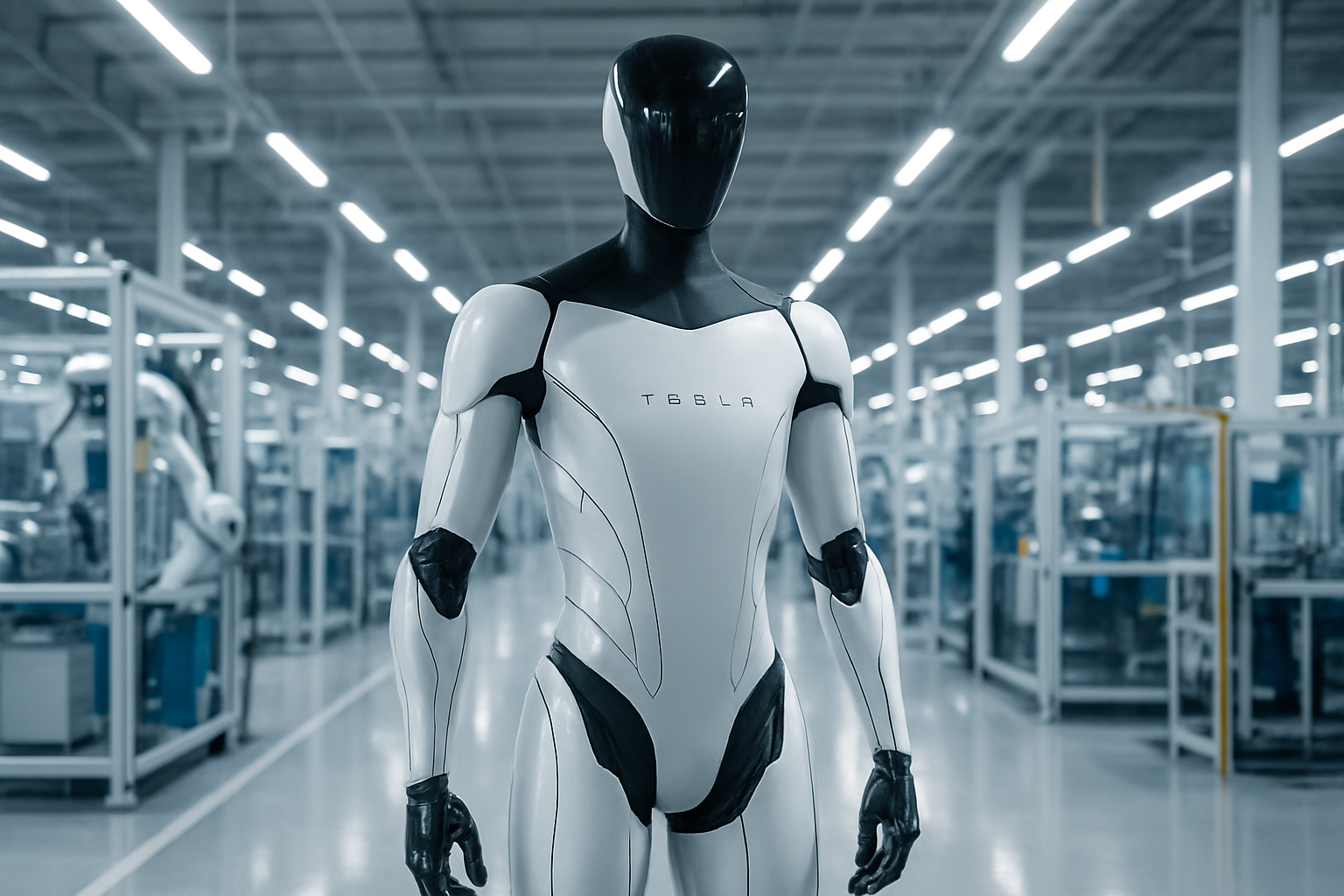
In Elon Musk's grand vision, Tesla is not just an electric vehicle company but a pioneer in artificial intelligence and robotics. Recently, Tesla's humanoid robot project, "Optimus," has once again taken center stage. With the launch of the pilot production line and the announcement of mass manufacturing plans for 2026, Optimus is moving from a concept to a reality.
Pilot Production Line Launch: From Concept to Reality
Tesla recently announced that the pilot production line for its third-generation Optimus humanoid robot has begun operations at the Fremont factory in California. This milestone signifies a major step forward in the engineering and manufacturing aspects of the Optimus project.
- Current Capacity: The pilot production line has an annual capacity of approximately 5,000 units.
- Technological Iteration: Although the third generation is currently in pilot production, Tesla had already unveiled the second-generation Optimus in December 2023, featuring a slimmer design, improved hand functionality, and more fluid movements.
2026: The Turning Point for Mass Manufacturing
Tesla's true goal is the large-scale commercialization of humanoid robots. The company plans to build and launch a much larger-scale production line for the third-generation Optimus in 2026.
| Phase | Timeline | Target Scale | Key Objective |
|---|---|---|---|
| Pilot Production | Current | Approx. 5,000 units/year | Validate design and manufacturing processes |
| Initial Mass Production | 2026 | Estimated 500,000 units/year | Expand market application and supply chain |
| Ultimate Goal | Long-term | Millions of units/year | Achieve cost-effectiveness and global deployment |
Cost Control: The Disruptive Goal of $20,000
Musk has repeatedly emphasized that the key to Optimus's success lies in its cost-effectiveness. Tesla's goal is to control the cost of a single Optimus robot to around $20,000, significantly lower than the cost of other humanoid robots currently on the market.
- Economic Impact: If this cost target is achieved, Optimus will possess immense commercial potential, capable of replacing a large amount of repetitive labor at a low cost, thereby having a disruptive impact on global manufacturing, logistics, and even home services.
Grand Vision: Eliminating Poverty and Future Applications
At the recent shareholders' meeting, Musk painted an extremely ambitious picture for Optimus's applications:
"The Optimus robot will eliminate poverty, provide amazing medical care for everyone, and even play a role in the containment of future crime."
These visions indicate that Tesla views Optimus as a general-purpose AI robot with the power for social transformation, whose applications will extend far beyond the confines of factories and warehouses.
Conclusion
The Tesla Optimus project is advancing at an astonishing pace. From the launch of the pilot production line to the planning for mass manufacturing in 2026, and the $20,000 cost target, Tesla's ambition in the humanoid robot field is clear. While challenges remain, Optimus is undoubtedly the most compelling chapter in Tesla's future growth story.