Introduction
As a Tesla owner or enthusiast, you might be a firm believer in Elon Musk’s vision-only autonomous driving approach. However, other giants in the automotive industry, such as Ford, hold a different view. Recently, Ford CEO Jim Farley publicly stated his preference for Waymo’s LiDAR-based autonomous driving method over Tesla’s vision-only solution. This article will delve into this technological debate, analyze the pros and cons of both approaches, and discuss what this means for the future of autonomous driving.
Vision-Only vs. LiDAR: The Battle of Autonomous Driving Approaches
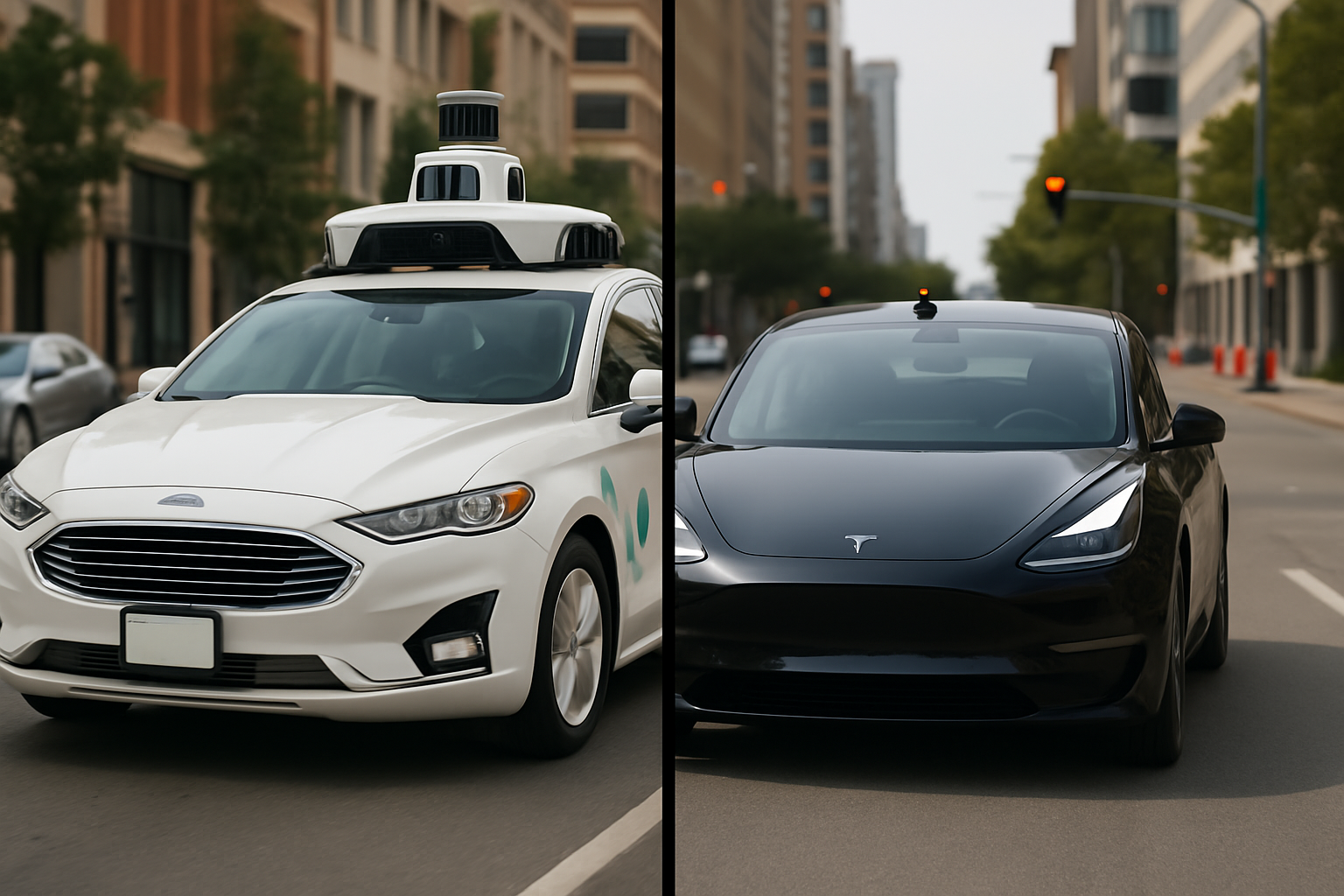
Tesla has consistently adhered to a vision-only strategy, believing that with cameras and powerful neural networks, vehicles can “see” the world like humans and achieve full self-driving. Musk has repeatedly stated that human drivers primarily rely on vision to drive, so cameras are sufficient for autonomous driving, and LiDAR is an “expensive and unnecessary sensor.”
However, Waymo (Google’s autonomous driving company) and many traditional automakers, including Ford, generally adopt a fusion approach, which involves adding LiDAR and millimeter-wave radar sensors to cameras. They believe that LiDAR can provide more precise distance and depth information, especially in adverse weather or low-light conditions, compensating for the shortcomings of cameras and thus improving the system’s safety and robustness.
Ford CEO’s Perspective: Safety and Trust Are Key
Jim Farley recently stated in a public appearance that he believes Waymo’s LiDAR solution “makes more sense.” He emphasized that for a brand like Ford, it is crucial to be “very careful” when introducing new technologies, as it involves consumer trust. Farley pointed out that where cameras might be completely “blinded,” a LiDAR system can still clearly “see” what is in front of the vehicle.
Farley’s remarks reflect the cautious attitude of traditional automakers towards autonomous driving technology. They prefer redundant sensor solutions to ensure safety in various complex scenarios. While this strategy may increase costs, it provides consumers with higher safety guarantees, thereby building stronger trust.
Tesla’s Persistence and Challenges
Despite skepticism from the industry, Tesla continues to adhere to its vision-only approach. Musk believes that by continuously optimizing software algorithms and accumulating massive amounts of real-world data, Tesla’s vision-only system will eventually surpass any LiDAR-dependent system, while being more cost-effective and easier to deploy at scale.
Tesla’s recent limited Robotaxi service launch in Austin is the latest practical application of its vision-only approach. Although safety monitors are still present initially, Tesla’s goal is to achieve fully driverless operation. If Tesla can prove that its vision-only solution can achieve or even surpass the safety of LiDAR solutions in various complex scenarios, it will be a disruption to the entire autonomous driving industry.
Impact on Tesla Owners: The Future of Technology Approaches
As a Tesla owner, your vehicle represents the future of vision-only autonomous driving. The statements from Ford’s CEO and the industry debate over different technological approaches remind us that autonomous driving technology is still rapidly evolving, with multiple paths to implementation.
Regardless of which technological approach ultimately dominates, Tesla’s exploration and breakthroughs in the vision-only field will be a significant chapter in the history of autonomous driving. As owners, we should pay attention to every update of Tesla’s FSD software, as it will directly impact our vehicle’s autonomous driving capabilities and future value.
Looking Ahead: All Roads Lead to Rome?
The ultimate goal of autonomous driving is to achieve safe, efficient, and convenient transportation. Whether it’s vision-only or multi-sensor fusion, all roads lead to Rome, striving to achieve this goal. The statements from Ford’s CEO and Waymo’s progress in LiDAR provide a strong reference for Tesla.
In the future, we may see mutual learning and integration between different technological approaches. Perhaps the ultimate solution will not be a single sensor, but a more intelligent system that combines the advantages of various sensors. As Tesla owners, we look forward to Tesla continuing to lead innovation, and no matter what technological approach is adopted, it will bring us a safer and smarter driving experience.